How Miniature Estate Sales Work (And How to Find Them)
Published May 27, 2026 by Anwen Thomas
Most of the truly exceptional miniature pieces in circulation today — Tom Pouce armchairs, Eugene Kupjack room boxes, IGMA Fellow work from the 70s and 80s — change hands at estate sales. The retail market for these pieces is essentially closed; the makers are gone or no longer producing, and serious collectors hold their pieces for decades. When a collection comes up for sale, it's almost always because the collector has passed away or their family is downsizing.
If you want access to the best work the hobby has produced, you need to understand the estate-sale circuit. Here's how it actually works.
What a miniature estate sale looks like
There are roughly four formats:
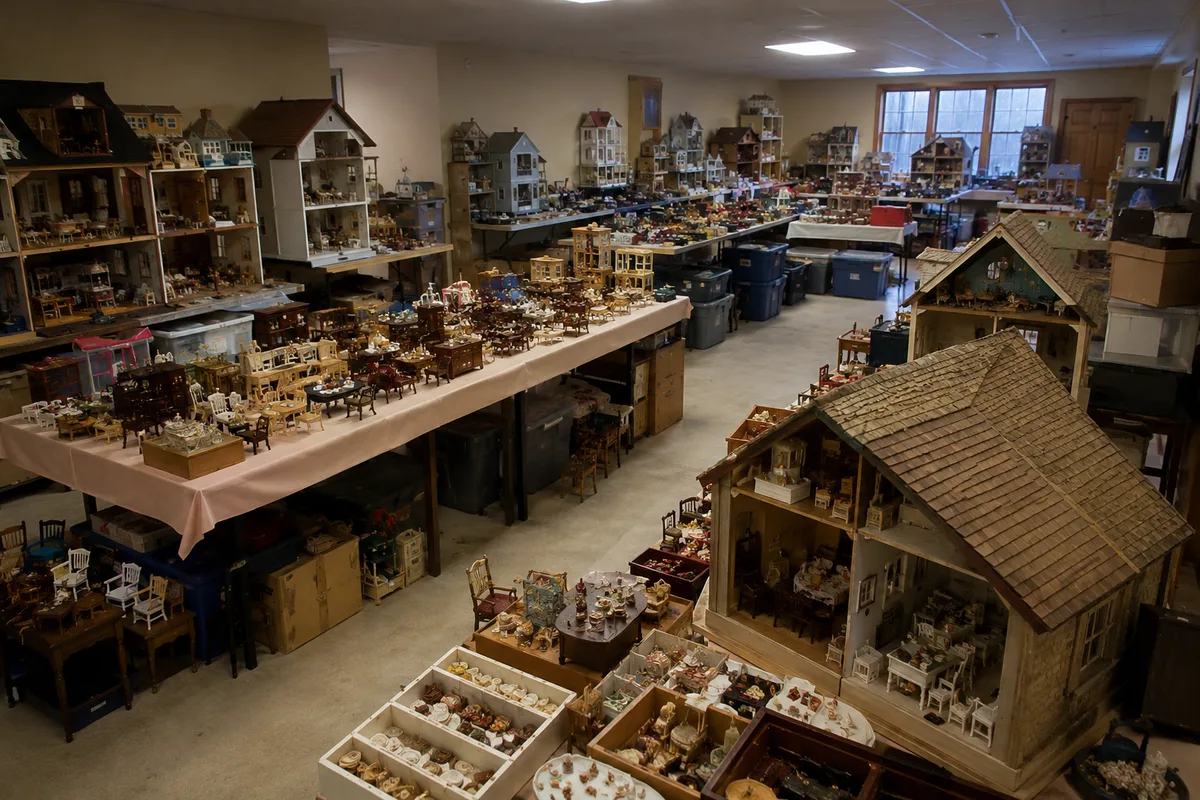
- The in-house estate sale — run out of the collector's actual home, usually over a weekend. The collection is laid out room by room exactly where the collector kept it. These are the best ones to attend in person. You get the full context — how the collector displayed pieces, which artisans they returned to, what they grouped together.
- The auction-house consignment — the family hires a specialty auction house (or a generalist with miniatures experience) to catalog and sell the collection. Pieces get lot numbers, online previews, and either a live or timed online auction. More expensive to buy at, but the most discoverable.
- The dealer purchase — a serious dealer buys the entire collection in a single transaction and then resells piece by piece at shows and online. You won't see the original sale, but the dealer's booth at the next major show will be telling.
- The online liquidation — increasingly common. The collection gets photographed and posted to eBay, Live Auctioneers, or a specialty platform over weeks or months. Lower overhead, broader reach, more competition.
How to find them before the rush
This is the hard part. Estate sales aren't well-indexed in any single place. The collectors who consistently get to them first are using a stack of channels in combination.
Specialty auction-house mailing lists
A handful of auction houses handle the majority of named miniature-collection sales in the U.S. Get on every one of their mailing lists. They publish catalogs well in advance and the lists go out before public marketing begins.
NAME and IGMA chapter networks
When a longtime member passes, the chapter usually knows first. Sales are often announced internally through chapter newsletters and Facebook groups before they hit any public channel. This alone is reason to join your regional NAME chapter.
The dealer grapevine
Established dealers who travel the show circuit hear about estate sales weeks or months ahead of the public. Build a relationship with one or two — buy something from them once a year, even small, and let them know what you collect. They'll quietly tip you off when a relevant collection comes up.
EstateSales.net and AuctionZip — with filters
Generalist estate-sale aggregators occasionally include miniature collections, especially when the executor is local and uses a regional company. Searching for "dollhouse," "miniature," "Kupjack," "Thorne," or specific artisan names with location filters can surface listings.
The Atlas estate-sale directory
Our estate sales section exists specifically because no one was indexing this. We track upcoming sales — both in-person and online — that are known to include serious miniature inventory. If you know of one we don't, submit it.
What to do once you find one
Two pieces of practical advice.
Show up early — or preview earlier. For in-person sales, the line forms before opening, and the best pieces go in the first hour. Most serious sales offer a paid preview the night before; that ticket is usually worth it. For online auctions, the inverse is true: the action happens in the last five minutes, and you want to have already done your homework, set a real maximum, and committed to it.
Verify before you buy. Estate sales are where the most extraordinary fakes and misattributions enter the market — not from malice, usually, but because the collector kept careful records that the family doesn't know how to read. If a piece is being sold as "by [famous artisan]" and the price is consistent with that attribution, ask for the documentation. Real pieces almost always come with a signed certificate, an exhibition record, or an original invoice. The absence of any documentation on a high-attribution piece is a red flag.
The other side of the conversation
If you are the collector — or the family of one — and you're trying to figure out how to responsibly disperse a collection, please reach out. The hobby has a small number of experienced consigners and a much larger number of well-meaning but undertrained generalists. Getting the right help at the start makes a real financial and historical difference.